Chicago has officially experienced all four seasons in the last two weeks, and I for one am very happy I finally got rainboots.
Today, I’ve got a high-level framework for how B2B tech companies can approach comms in the age of LLMs, based on my read of the latest research. I break it down into three things: where to be, how to get there, and how to measure results.
The good news: even as things evolve fast in this space, the core strategies for getting and staying on your prospects’ radar are constant.
Let’s take a look!

Where to be: where your audience hangs out
This one sounds easy in theory, but it’s often hard in practice, in part because the online landscape is in near-constant flux.
For example, a whopping 84% of B2B SaaS CMOs use an LLM specifically when they’re looking for vendors.
So even if it’s hard to track AI visibility and even harder to tie it to revenue, anyone selling to B2B SaaS CMOs should want their brand to show up in LLM results.
But that’s a pretty niche audience that we happen to have data on. How can B2B brands figure out where their audience hangs out? Tools like SparkToro make it easier to identify the online hot spots, but I’ve yet to come across a tool that does the same for IRL events or private communities (if you know of one, please tell me!).
Those venues matter a lot: 65% of the SaaS CMOs start their vendor search by asking for recommendations from a peer community. This means the most recommended brands will be the ones that have shown up and proven themselves where those peers hang out – which brings us back where we started.
My biggest take here: for B2B brands, LLM visibility matters. But based on user volume alone, I suspect it’s having less of an impact than the shift to zero-click behavior. I.e., if you’ve lost traffic from Google, you won’t make it up by “cracking the code” of LLM visibility.
The more valuable adjustment for most brands is investing in platform-native content that nurtures your audience where they already spend time.
How to get there: PR + thought leadership + SEO
Let’s say you determine that your target audience includes heavy users of LLMs, LinkedIn, and certain trade pubs. Getting into the second two is straightforward: establish a regular LinkedIn cadence, start pitching trade pubs.
As for appearing in LLM results, we know more this month than we did last month.
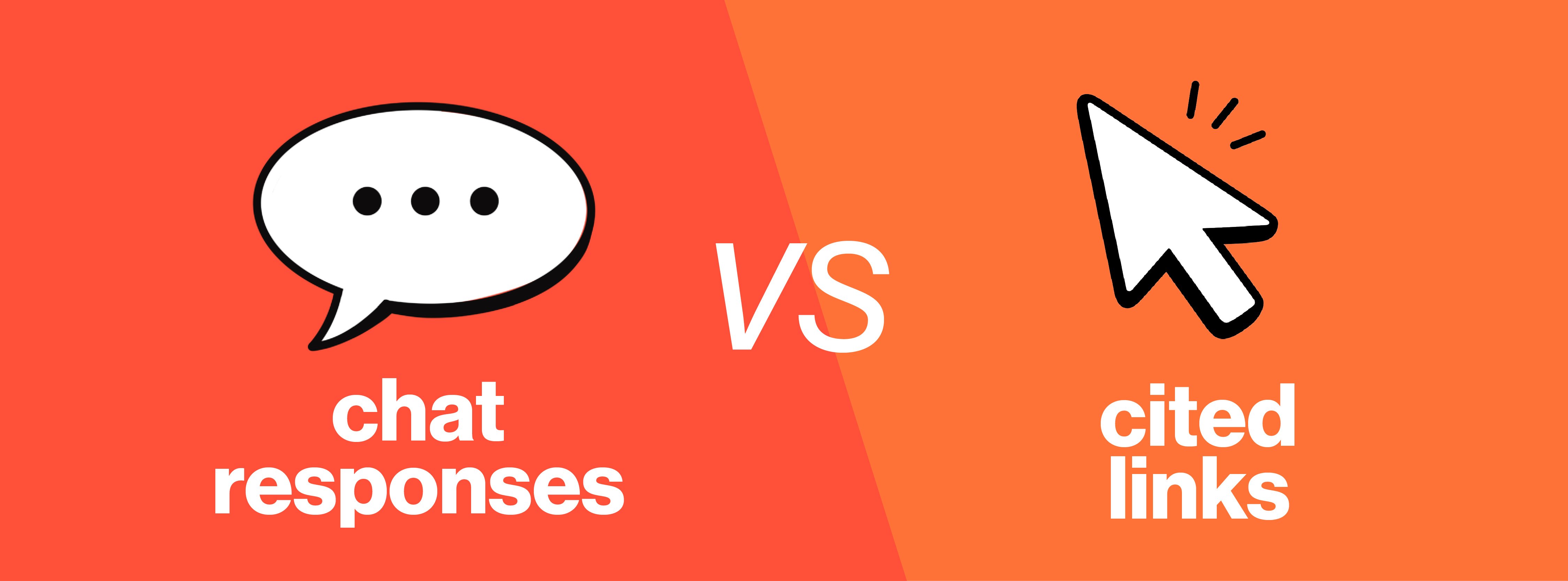
For example, when you ask an LLM to provide an answer and then cite its sources, there's a good chance it generates those source links in a separate process from the one it uses to generate the text answer. Put simply:
- Summary answers are a function of what's in an LLM’s training data.
- Link “citations” are pulled from what's in search results (typically Bing or Google).
So optimizing for “LLM visibility” is actually not one thing but (at least) two separate things.
To increase the odds that you appear in unlinked chat responses, you want to get your brand mentioned in relevant contexts as much as possible. Generally, that means doing all the things you’d do to get in front of your target audience (media placements, press releases, owned blog posts, etc.). Yay!
Keep in mind, though:
- Training data cutoff dates are always in the past. This GitHub resource identifies training those dates for major models (e.g., August 2025 for Clause 4.6 Opus).
- Anything you’ve published since then is not part of the training data for that model but might be included in the next one.
To increase the odds that you appear in cited links, you want to do SEO.
Because of the rise of zero click, though, you likely won’t see the traffic you once did from your SEO investment.
This is what Search Engine Land calls “Dark SEO”: instead of ranking, getting clicks, and then converting site visitors, the goal is to be scraped, be summarized, and be recommended by LLMs.
How to measure results: 3 things to track
What we have now are strong theoretical arguments for investing in brand-building efforts. But how will we know if they’re working? I’ll be honest: you can’t measure these things with a nice tidy dashboard.
But you CAN measure them. Here are three things to track manually:
- Length of your sales cycle. When prospects can “warm themselves up” via the materials you put out (bylines, blog posts, social posts, etc.), they tend to come to you warmer and close faster. To measure this, of course, you have to have to know your baseline.
- Questions prospects ask during sales calls. These should shift from informational to scenario-specific. When your comms materials provide valuable information, from your perspective on specific technologies to your approach to work to customer success stories, early conversations are less about explaining the basics and more about a prospect's exact situation.
- Brand awareness at IRL events. After 18 months of a content program, a client CEO got back from an industry conference and said, “Everyone knows us. That's the first time I didn't have to explain who we are and what we do.” The messaging had broken through.
If you don’t have a baseline for any of the above, now’s the time to get it. From there, you can estimate what various improvements would mean for your bottom line. It’s going to be as solid a case as the folks with the dashboards will make; the key is to be confident. Lord knows they are.
That’s all for this month. Thanks for reading!
Brenna